Custom, fast, SEO-ready
Stores that convert
Custom builds & Integrations
Modernize what you have
We will audit your current site for free and tell you exactly what is holding it back.
Dominate your city
Site health and speed
Authority & backlinks
Shopify & WooCommerce
Find what is holding you back
Get a free SEO health check. We will show you exactly where you are loosing rankings.
Marks that mean something
Colors, fonts, guidelines
Cards, brochures, singage
Get a free brand strategy check. We will show you exactly where you can win hearts.
Smarter content at scale
Strategy & Management
Google & Meta ads
We work, you deliver
Get a free brand strategy check. We will show you exactly where you can win hearts.
More service calls
Local lead generation
Win more bids
Fill your calendar
More patient bookings
High-end client grown
HIPPA-aware marketing
Case lead generation
We work across 35 plus industries. If yours is not listed, chances are we have done it.
Get a free introductory call. We will learn exactly what you are looking for and guide you on next steps.
AI helps us research and draft faster. Our writers and editors handle strategy, voice, and fact-checking so every piece is ready to publish.
Fill out the form below and our team will get back to you within 24 hours.
AI content writing uses generative AI and large language models to help draft, research, and structure written content faster than a human working alone. Done well, it pairs AI’s speed with human expertise, fact-checking, and editing to produce content that’s accurate, original, and genuinely useful, not just fast to publish.
This guide covers how AI content writing actually works, the best tools available, SEO best practices, and the legal and ethical considerations every business should understand before relying on AI-generated content.
AI content writing is the practice of using generative AI and large language models to assist with drafting, researching, and structuring written content.
It isn’t about replacing writers entirely. The strongest approach combines AI’s speed with human collaboration, using AI to handle research and first drafts while a human adds expertise, brand voice, and editorial judgment before anything gets published.
Each tool has strengths and weaknesses depending on whether you need SEO optimization, brand consistency, short-form copy, or long-form drafting, and pricing and use cases vary accordingly.
Strong for drafting, brainstorming, and research; flexible across content types.

Built specifically for SEO content optimization and on-page scoring.

Useful for short-form marketing copy and templates.

Google's AI model, useful for research and content generation.

A budget-friendly option for shorter content pieces

Focused on editing, tone, and clarity improvements.

Built for enterprise teams needing consistent brand voice at scale.

A simpler tool for quick, general content generation.

Integrated directly into HubSpot's marketing tools.
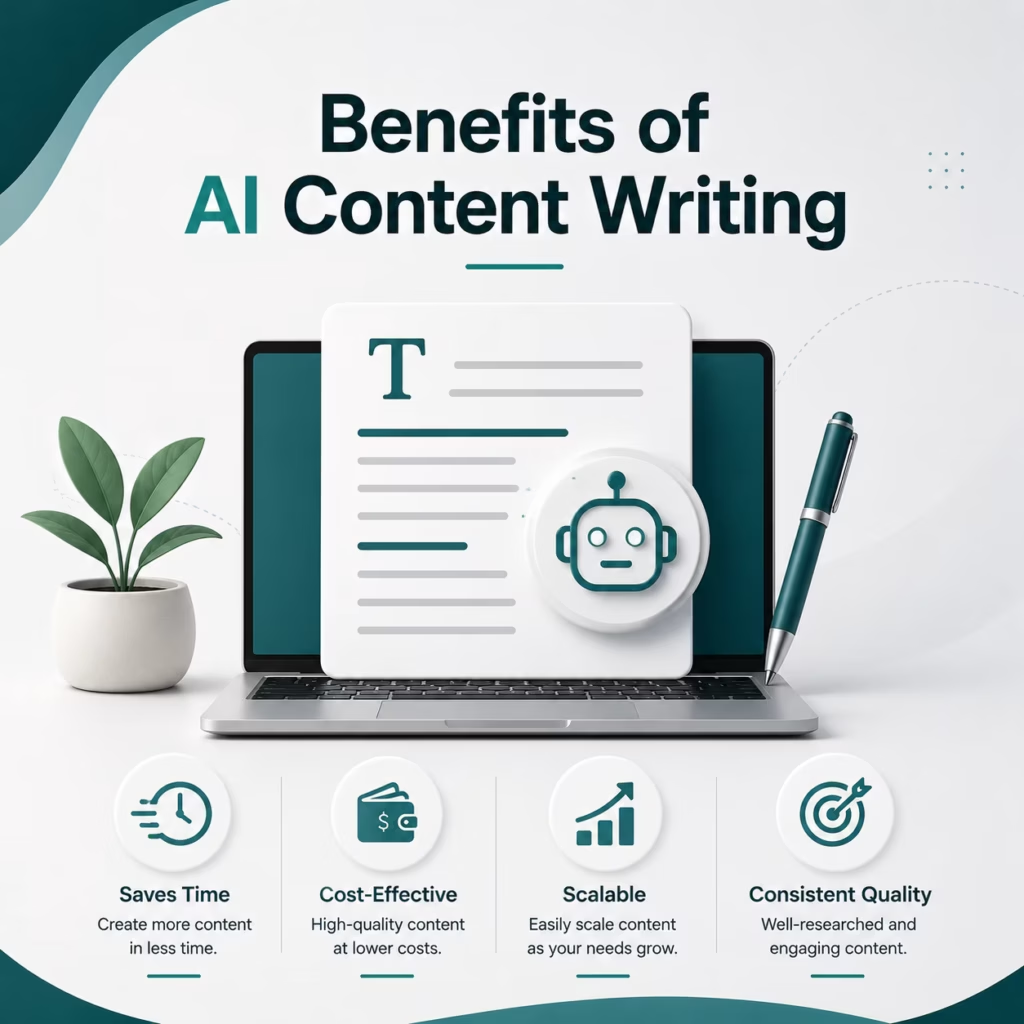
Used correctly, AI content writing offers real advantages, including:
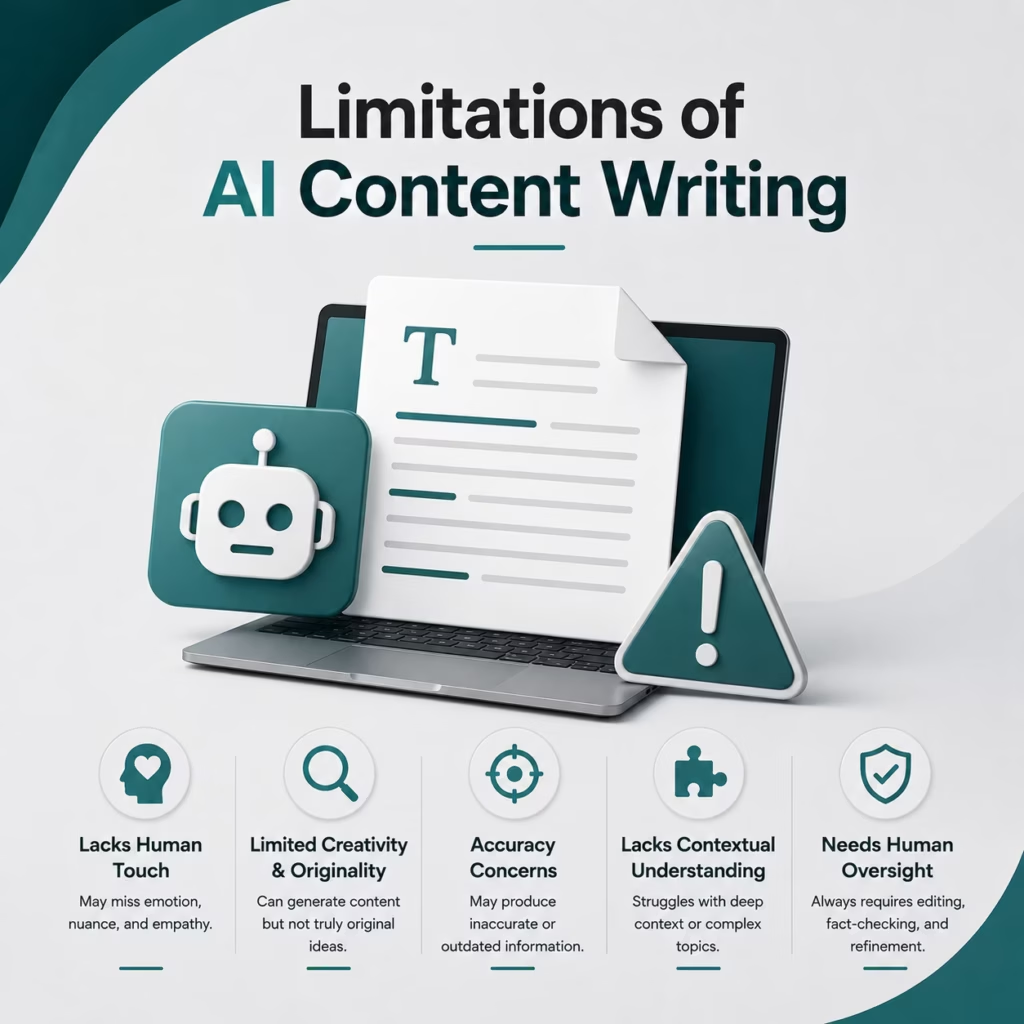
AI content writing comes with real limitations that shouldn’t be ignored:
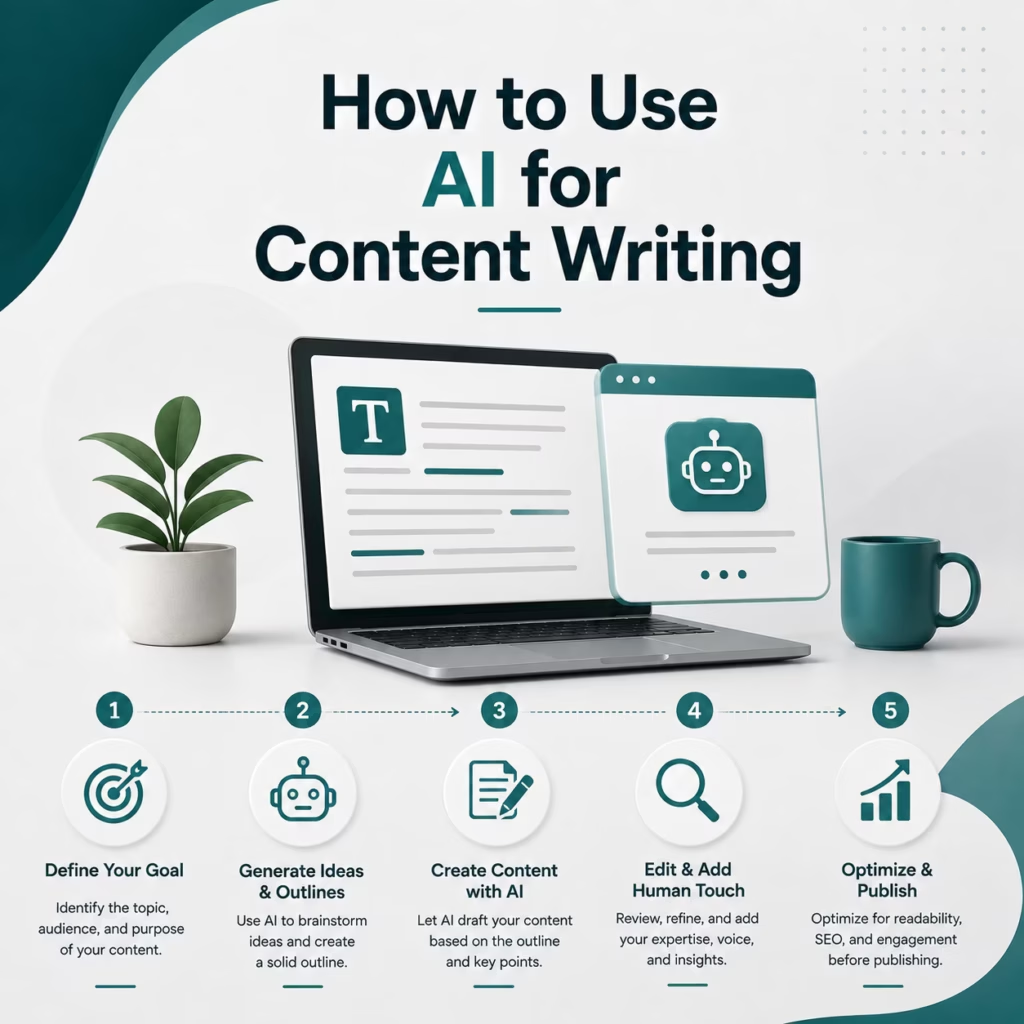
A typical AI-assisted content workflow follows a consistent process:
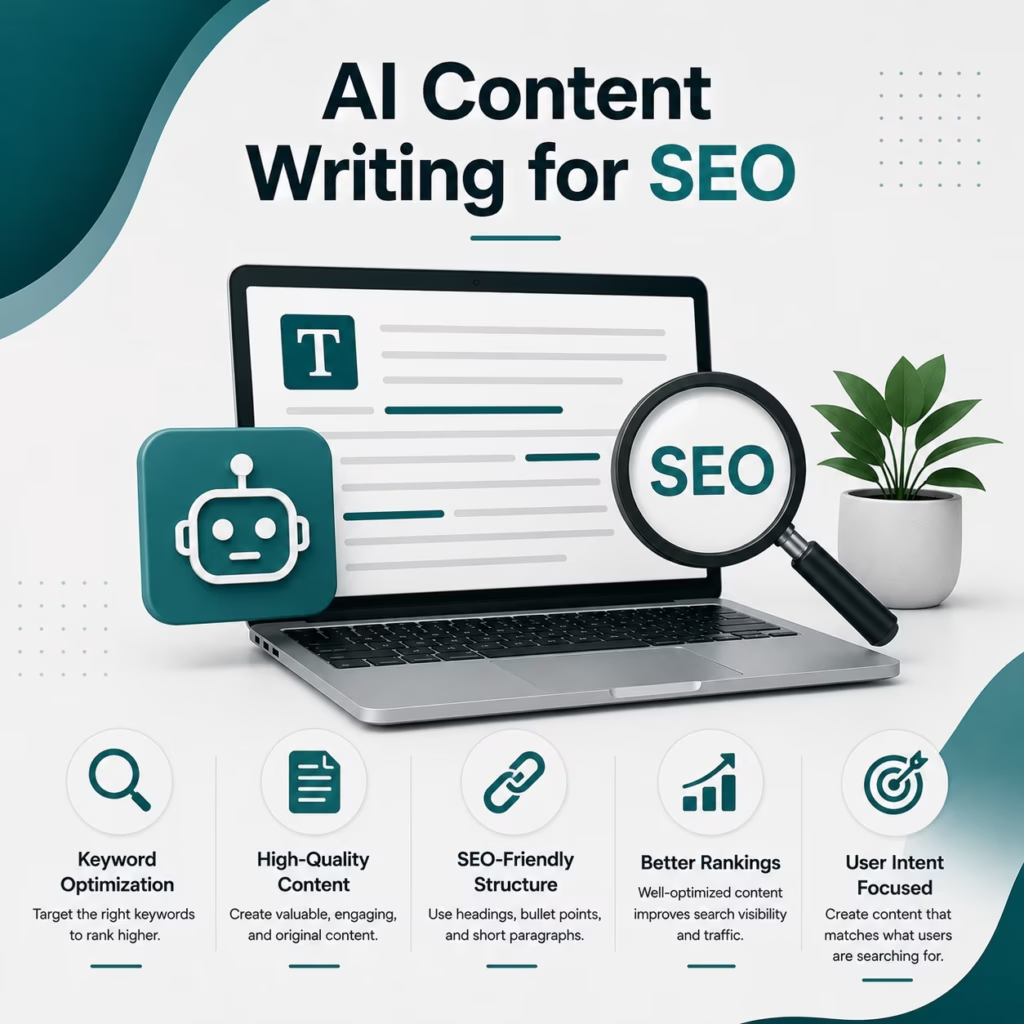
AI can meaningfully speed up SEO-focused content work, particularly around keyword research, understanding search intent, and applying semantic SEO and entity optimization at scale.
It also supports building topical authority through faster content clustering, stronger internal linking strategies, and content structured for featured snippets and AI Overviews. None of this replaces the need for accurate, well-edited content, but it does make the process considerably faster.
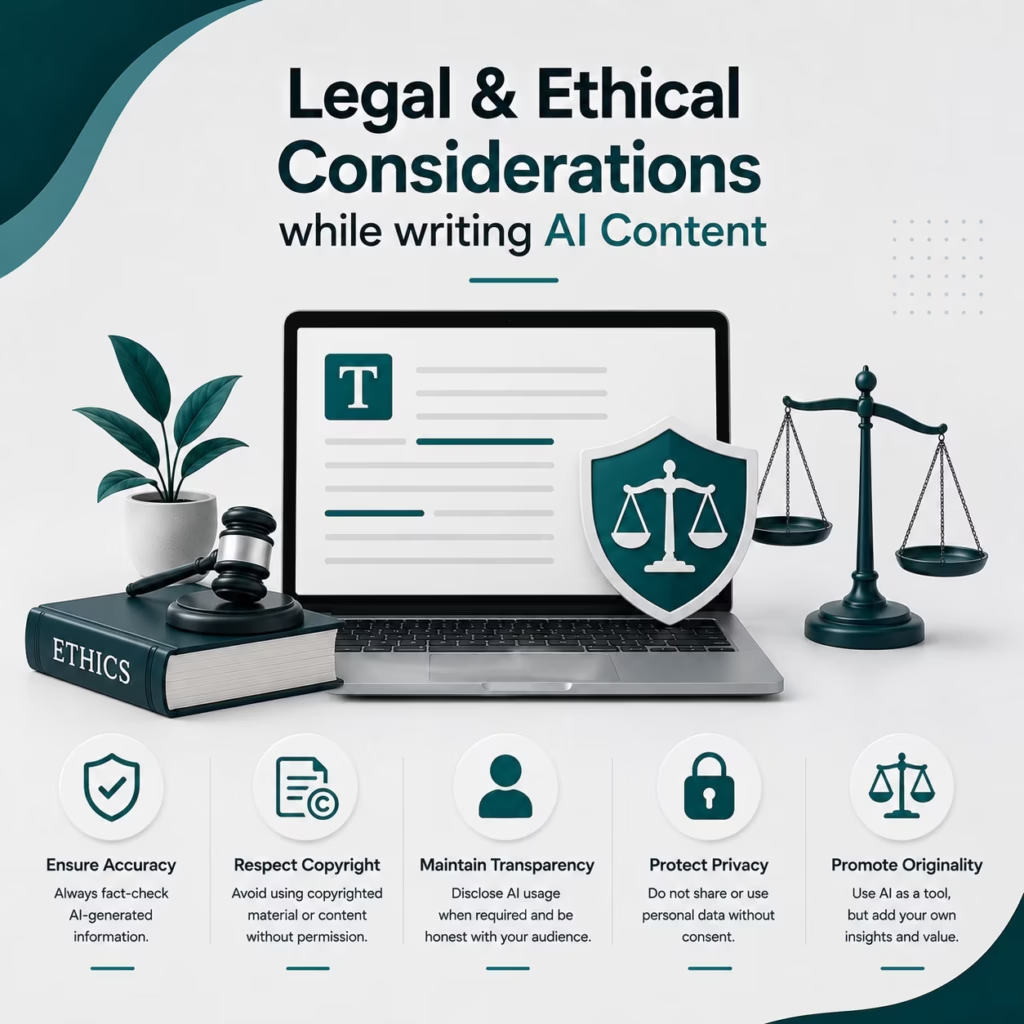
Using AI for content raises real legal and ethical questions worth understanding, including copyright and plagiarism concerns, whether AI disclosure is expected or required, data privacy when using AI tools, and the broader responsibility of using AI thoughtfully rather than publishing unreviewed output. Content originality remains essential regardless of how a first draft was produced.
AI content writing is heading toward more autonomous AI agents, increasingly personalized content, and multimodal AI that combines text, image, and video generation. Human-AI collaboration will likely remain the standard, with AI handling speed and scale while people provide judgment, expertise, and quality control. AI search optimization will also continue shaping how content gets structured for both traditional and AI-powered search.
We’ve partnered with businesses across:
AI content writing is the use of generative AI and large language models to help draft, research, and structure written content, typically refined afterward through human editing.
There’s no single best tool. ChatGPT and Gemini work well for drafting, while Surfer SEO is better suited for SEO-focused optimization.
Yes. AI can speed up keyword research, outlining, and structuring content for search intent, though human review remains essential for quality and accuracy.
Google doesn’t penalize content simply because AI was involved. What matters is whether the content is accurate, original, and genuinely helpful to readers.
Start by learning prompt engineering, understanding SEO fundamentals, and developing strong editing skills to refine and fact-check AI-generated drafts.
Free tools like ChatGPT, Gemini, and Rytr’s free tier offer solid starting points, though most serious content workflows eventually require paid tools for deeper SEO features.
No. AI can speed up drafting and research, but human writers provide expertise, judgment, and brand voice that AI alone can’t fully replicate.
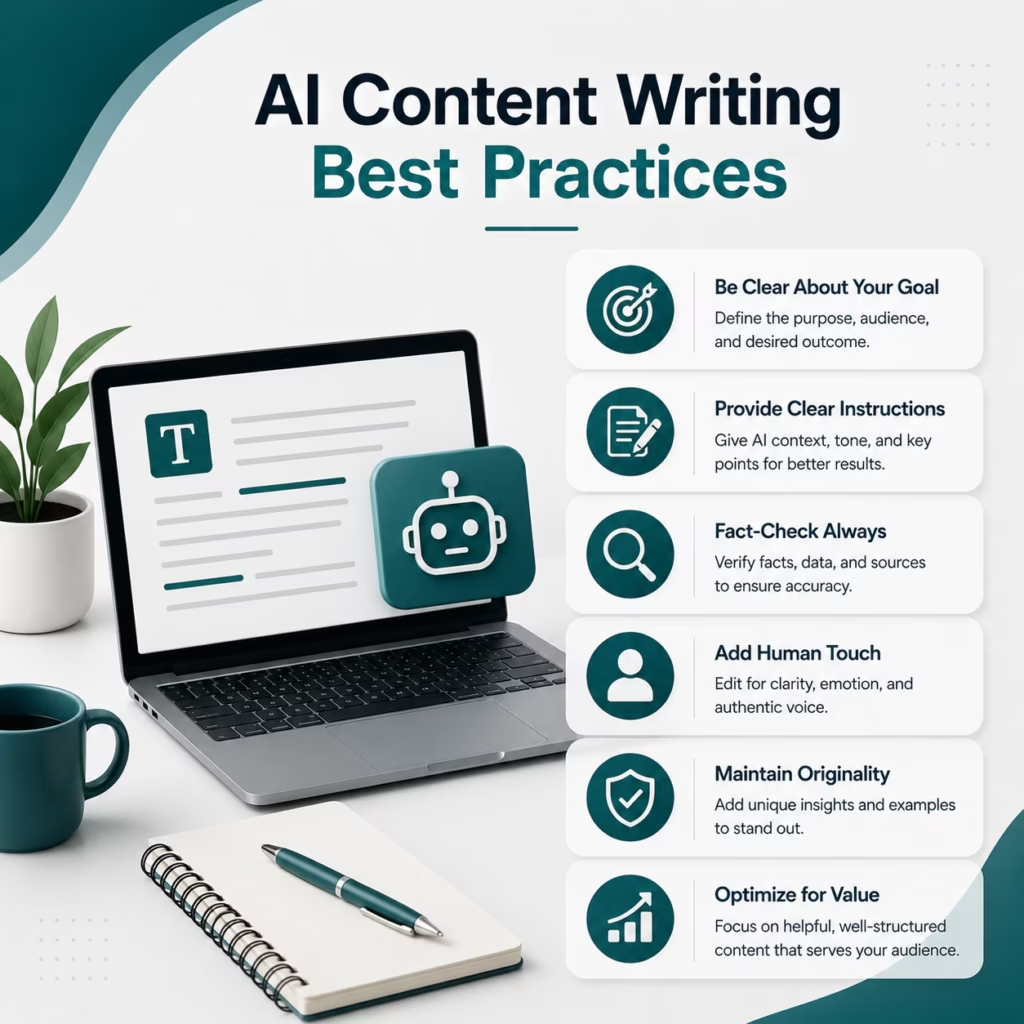
Add original insight, adjust tone to match your brand voice, remove generic phrasing, and have a human editor refine the piece before publishing.
Legal considerations include copyright questions around training data, potential plagiarism, and whether AI disclosure is expected in your industry or region.
Copyright law around AI-generated content is still evolving and varies by jurisdiction, which is why human involvement and originality remain important.
Provide clear context, specific instructions, examples of desired tone, and detailed information about your audience and goals.
AI tools can generate an initial draft or outline quickly, giving writers a starting point to edit and build from rather than facing a blank page.
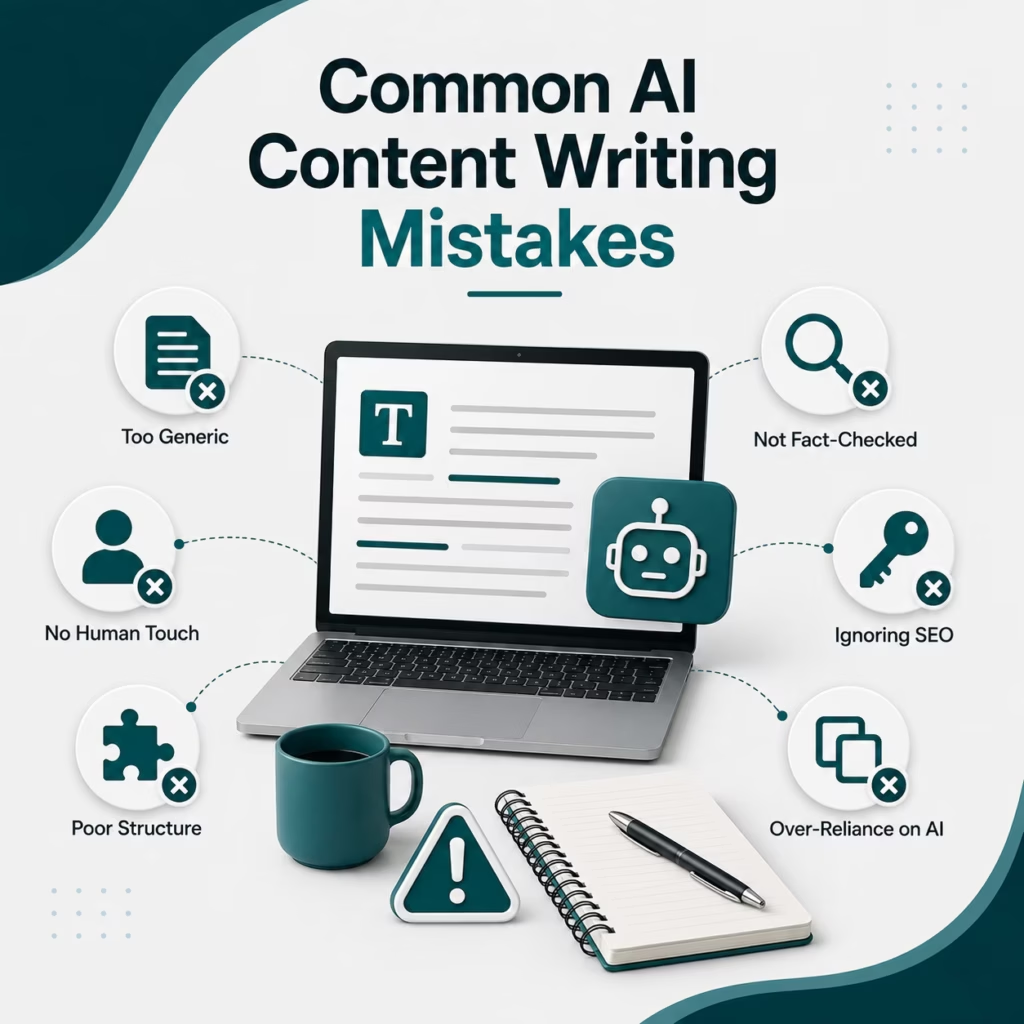
Avoid publishing AI output without review, using vague prompts, skipping fact-checking, and ignoring your audience’s actual search intent.
Yes. AI can assist with both, though blog content typically requires more fact-checking and editorial depth than shorter social media posts.
The future points toward AI agents, more personalized content, and multimodal AI, with human oversight remaining central to quality and accuracy.
Yes. As an AI content marketing agency, we use AI-assisted blog writing to speed up research and drafting, but every piece goes through human review before it’s finalized.
Not inherently. Google evaluates content on quality, accuracy, and usefulness, not whether AI was involved in the drafting process.

At Premier Consulting, we work as an AI content marketing agency built around AI assisted blog writing paired with genuine human editing, giving you the speed of AI without sacrificing accuracy, originality, or brand voice.
Every piece of human edited AI content we deliver is fact-checked, optimized for SEO, and reviewed before it ever reaches your site.